
VisLM Free Download: Loudness Compliance with Timecode Locking
If you're mastering for broadcast or streaming, you know the headache: you need to prove your audio meets specific loudness standards like EBU R128 or Netflix specs, and any tiny edit means re-measuring the entire file. VisLM addresses this by locking loudness data to timecode, so minor changes don't force a full re-scan. It's a professional tool for ensuring compliance, and you can get it as a free download.
What It Does
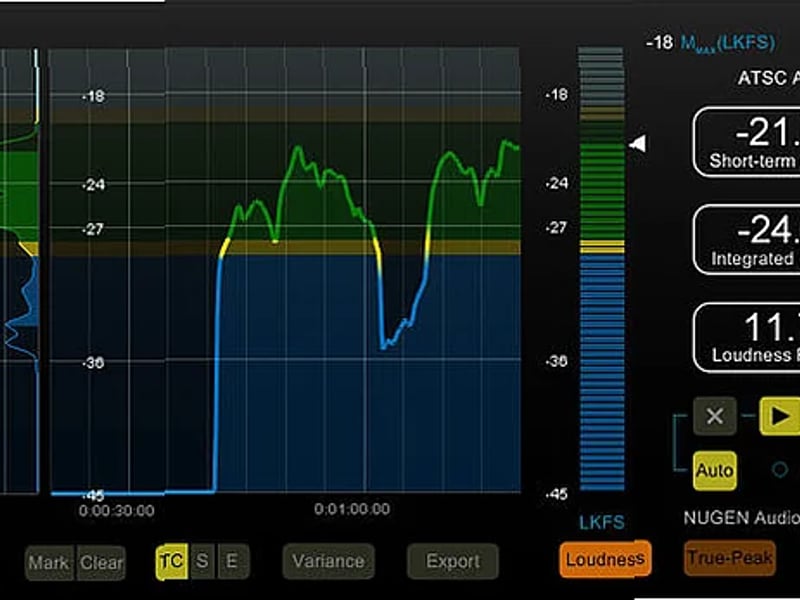
VisLM is a loudness meter built for audio professionals who need detailed, frame-accurate measurement. You use it to measure audio against major international standards like ITU-R BS.1770, EBU R128, and CALM Act specifications. Its core function is to provide proof of compliance reporting, where all loudness data is saved with your session and locked to timecode from your DAW or NLE. This means you can generate reports that show exactly where in the timeline your audio meets or violates the required specs.
Key Measurement Tools
Core Loudness Meters You get the standard set of meters: Momentary, Short-term, and Integrated loudness, all compliant with ITU-R BS.1770. It also includes Leq(m) for TASA measurement. The interface is clear and resizable, with a scrolling history view to visualize levels over time. True Peak and Violation Logging The True Peak meter displays values as defined in ITU-R BS.1770, including inter-sample peaks measurement. A critical feature for postmortem analysis is its ability to log True Peak violations against timecode, so you can see exactly which frames are causing issues. ReMEM Technology This is VisLM's automated loudness memory. ReMEM can store up to 12 hours of loudness data locked to timecode. When you make a minor edit or an overdub, the loudness updates automatically without needing an end-to-end re-measurement of the whole session. You can also perform offline AudioSuite scans and load that data back into the real-time meter. Compliance and Configuration The plugin comes with international and regional presets and is suitable for Netflix best practice guidelines. It's highly configurable for legacy, station-specific, or internal specifications. You can set up simple safety zones and alerts for less experienced operators or use it for detailed expert reporting with optional data logs.Who Should Use It
This fits specific professional scenarios. If you're in broadcast post-production and need to deliver content that passes EBU R128 or CALM Act compliance with a timecoded report, this handles that. It's also built for mastering engineers targeting streaming platforms like Netflix, where you need to document True Peak violations and integrated loudness against their best practices. Finally, it's useful in any workflow where you're revising mixes—the ReMEM feature saves hours by updating loudness measurements after edits instead of forcing a full re-render and scan.
 Popular
 Categories


